Health officials in Nigeria are raising alarms that the country cannot reliably detect the next disease outbreak before it spreads. Nigeria Health Watch, a prominent health policy organisation, released findings this week showing that diagnostic capacity across the country remains far too limited to serve as an effective early warning system. Without major investment in laboratory networks and testing infrastructure, the nation risks being caught flat-footed when the next epidemic emerges.
The Diagnostic Deficit Exposed
Nigeria's public health laboratories handle a fraction of the disease surveillance workload they were designed to manage. Health workers across multiple states report that samples collected from patients with fever, respiratory distress, or other symptoms consistent with infectious disease often wait weeks before reaching a facility capable of processing them. That delay means patients receive no confirmed diagnosis, treatment decisions get made on incomplete information, and the broader community receives no alert that something unusual is circulating.
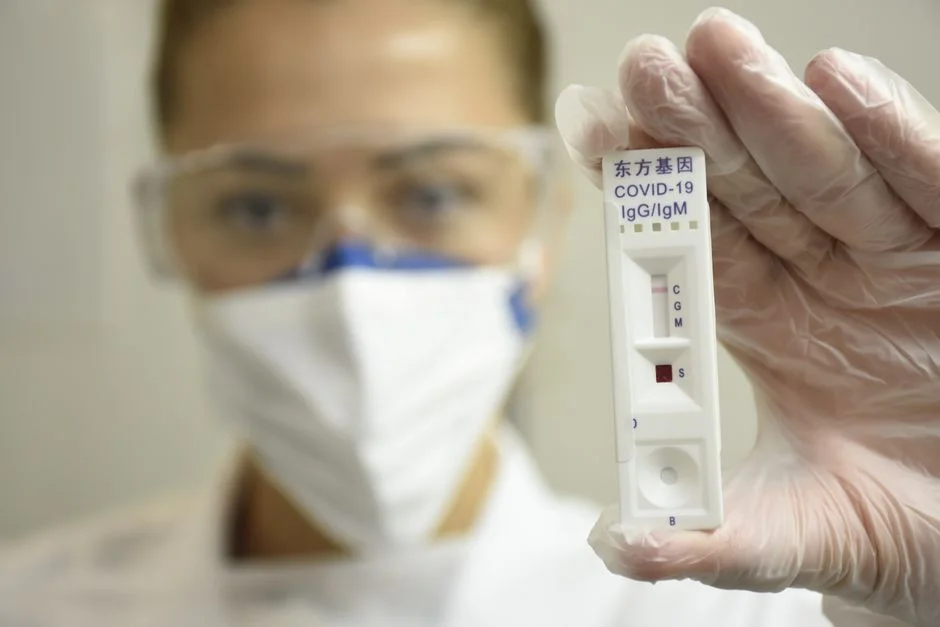
The problem is not confined to a single region. Federal health authorities acknowledge that diagnostic coverage remains uneven from state to state, with urban centres performing marginally better while rural areas struggle with near-total absence of functional testing sites. Nigeria Health Watch documented cases in which patients in Katsina and Edo states experienced diagnostic delays exceeding two weeks, during which no public health notification was triggered despite their symptoms matching profiles for diseases already known to be circulating in West Africa.
Patients Bear the Cost
For individuals seeking care, the consequences are immediate and tangible. Without a confirmed diagnosis, patients cannot access targeted treatments in many cases. Doctors in public hospitals say they frequently must treat empirically, meaning they prescribe medications based on symptoms alone rather than laboratory confirmation. This approach works for some conditions but fails for others, leaving patients vulnerable to complications that earlier testing might have prevented.
Community health workers operating in informal settlements around Lagos describe a secondary problem: when patients do not receive clear answers about what made them sick, they lose confidence in the health system. Many stop seeking care altogether during subsequent illness episodes, increasing the chance that a genuine outbreak could gain a foothold before attracting official attention.
Treatment Decisions Without Data
Medical professionals working in tertiary hospitals in Abuja and Enugu confirmed that the absence of rapid diagnostic results affects even complex cases. Physicians managing patients with suspected zoonotic diseases, which constitute a significant portion of Nigeria's outbreak risk profile, say they often lack the field data needed to make informed decisions about isolation protocols or community outreach. The result is reactive rather than proactive public health response.
One physician at a federal medical centre in the Southeast region, who requested anonymity due to institutional restrictions, described treating a cluster of patients with unexplained febrile illness last dry season. By the time laboratory results arrived confirming the pathogen, weeks had passed and the patients had already dispersed to their home communities. No systematic contact tracing was initiated.
Why Surveillance Cannot Function Without Diagnostics
Epidemiological surveillance depends on a simple chain of events: a patient falls ill, a sample is collected, testing occurs, results are reported, and public health officials act on the information. Nigeria's system breaks down at the testing stage for the majority of reported illness. The Nigeria Centre for Disease Control, which coordinates national outbreak response, has published strategic plans calling for expanded laboratory networks, but implementation has lagged behind stated goals.
International health partners, including organisations providing technical assistance through regional programmes, have noted the gap between Nigeria's surveillance ambitions and its diagnostic realities. Funding allocations for laboratory equipment and reagent procurement have not kept pace with population growth or the expanding list of pathogens requiring differential diagnosis.
What Failed During Recent Outbreaks
Health policy analysts point to several recent health emergencies where delayed diagnosis contributed to slower response times. While Nigeria has successfully managed major outbreaks in the past, including the Lassa fever outbreaks of recent years, those successes required enormous emergency mobilisation rather than functioning routine surveillance. The country's ability to scale up response in crisis mode is commendable, but it masks a structural weakness: routine disease monitoring should detect threats automatically, not require emergency intervention to function.
Nigeria Health Watch argues that relying on crisis-mode response to compensate for chronic diagnostic failures is unsustainable. Each emergency mobilisation drains resources from other health programmes, disrupts routine service delivery, and places extraordinary strain on health workers already operating in under-resourced facilities. The organisation estimates that Nigeria needs at least three times its current number of functional district-level laboratories capable of performing basic microbiological testing to approach adequate surveillance coverage.
International Comparisons and Regional Context
Neighbouring countries face similar challenges, but Nigeria's size and population density raise the stakes considerably. With more than 200 million people spread across diverse ecological zones, Nigeria serves as a sentinel for disease activity across West Africa. Gaps in Nigerian surveillance affect the entire region's early warning capability. International health security frameworks recognise this dynamic, which is why Nigeria's diagnostic capacity is monitored closely by global health partners.
However, external support alone cannot solve the problem. Laboratory infrastructure requires consistent domestic funding, trained personnel, and supply chain management that has proven difficult to maintain at scale. The infrastructure that exists often operates with intermittent power supply, unreliable internet connectivity for reporting systems, and chronic shortages of basic consumables.
Funding Gaps and Political Priorities
Health advocacy groups say diagnostic infrastructure has struggled to compete for funding against more visible health programmes. Political attention tends to flow toward initiatives that produce visible results, such as vaccination campaigns or construction of health facilities. Laboratory capacity, being largely invisible to the public, rarely attracts equivalent resources. Nigeria Health Watch and allied organisations have been lobbying for dedicated budget lines for laboratory systems, arguing that diagnostic capability is infrastructure as essential as roads or electricity for public health protection.
The federal ministry responsible for health has acknowledged the need for investment but points to competing fiscal pressures. Some state governments have experimented with public-private partnerships to support laboratory networks, with mixed results. Effective models typically involve international technical partners providing equipment and training while domestic authorities manage operations and supply chains.
What Comes Next
Health officials say the immediate priority is expanding point-of-care testing at primary health centres, where most Nigerians first seek care. Several pilot projects deploying rapid diagnostic technologies are underway in selected local government areas. If these pilots demonstrate feasibility, scale-up could begin within the next eighteen months, assuming adequate funding materialises.
Watch for upcoming budget negotiations in the National Assembly, where health advocates plan to push for increased allocation to laboratory infrastructure. The next quarterly review of the national disease surveillance data will also provide a benchmark for whether diagnostic turnaround times have improved. Citizens in communities where testing remains inaccessible should watch whether their state governments announce any new laboratory partnerships or mobile testing initiatives. The next outbreak will test whether Nigeria learned from these warnings.
See Also
- Ebola Survivor Reveals Three Words That Could Save Lives in Next Outbreak
- South African Police Expose Corruption Amid Cocaine Raids — Communities Left Reeling