The African Union has formally endorsed demands for reparations over the slave trade and colonialism, a move that would have seemed impossible just years ago. The decision marks a turning point in a debate that has simmered for generations but now commands serious international attention. France and other former colonial powers are facing mounting pressure to respond to claims that historians estimate run into trillions of dollars.
A Debate That Refused to Die
For decades, talk of reparations for slavery in Africa carried a simple label: unthinkable. Western governments dismissed such demands as impractical, legally baseless, or simply too politically sensitive to address. The African Union itself stayed largely silent on the issue, focusing instead on development finance and trade agreements. That caution has now evaporated. Member states voted overwhelmingly to back a reparations framework that will force former colonisers to the negotiating table.
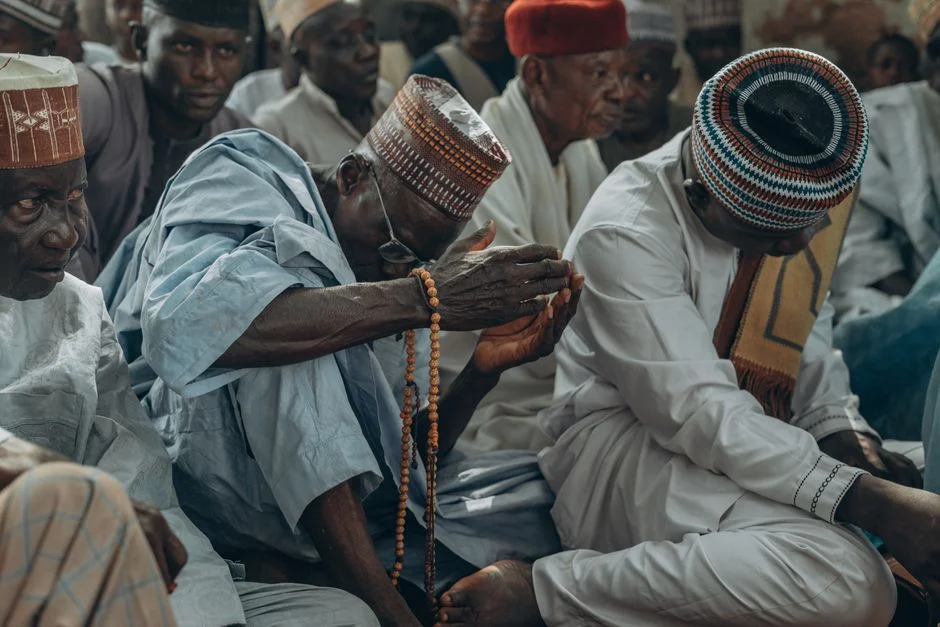
The shift did not happen overnight. Grassroots movements across West Africa, the Caribbean, and South America kept the issue alive through protests, legal challenges, and academic pressure. Local communities in Nigeria, Ghana, and Senegal organised hearings where descendants of enslaved people shared testimonies about inherited poverty and social dislocation. Those voices finally reached the corridors of power in Addis Ababa.
The African Union's Historic Vote
The African Union's backing came after years of internal debate about whether to pursue reparations through international courts, bilateral negotiations, or both. Delegates from 47 member states approved a resolution establishing a dedicated task force to quantify claims and engage foreign governments. The vote was 38 in favour, with seven abstentions and two opposed. Observers described it as the most consequential resolution the organisation had passed in a decade.
The task force will initially focus on cases with the strongest legal footing, including lands seized without compensation and forced labour systems that persisted into the twentieth century. Officials have declined to publish a preliminary figure but acknowledged that estimates circulating in academic literature range from hundreds of billions to several trillion dollars. The real figure, one delegate noted, may never be settled through spreadsheets alone.
France's Complicated Position
France has found itself at the centre of the debate more than almost any other European power. Its colonial empire in West Africa was among the largest, and France extracted enormous wealth from territories that now include Mali, Niger, Burkina Faso, and Benin. President Emmanuel Macron has acknowledged that France committed crimes against humanity in Algeria and that the Rwanda genocide represented a catastrophic failure of French policy. But he has stopped short of endorsing financial reparations for slavery.
French officials have instead pointed to development aid, debt relief packages, and cultural cooperation agreements as evidence of France's commitment to reconciling with its past. Critics dismiss these measures as insufficient and note that they lack any formal acknowledgment of liability. The African Union's resolution complicates that position considerably. France now faces a united continental bloc rather than scattered individual claims.
What Citizens Are Demanding
Behind the diplomatic language lies a more personal story. In Benin, communities have documented how French forces destroyed royal palaces and seized archives in 1892. In Senegal, descendants of tirailleurs — soldiers conscripted from French West Africa — have filed claims for unpaid wages and pensions. In Nigeria, advocates have pressed the government to pursue compensation for the slave trade itself, not just colonial-era land seizures.
Local activists argue that reparations are not merely about money. They point to structural gaps in education, healthcare, and infrastructure that they trace directly to extractive colonial policies. Housing in former French West Africa still reflects urban planning decisions made to serve colonial administrators rather than local populations. The reparations movement, its supporters say, is ultimately about recognition — an acknowledgment that centuries of exploitation left scars that did not simply heal when flags were lowered.
The Legal Landscape
Legal experts remain divided on whether claims can succeed in international courts. The principle of state immunity has protected former colonial powers from being sued in their own courts for acts committed abroad decades ago. Some jurists argue that new frameworks for transitional justice, including the UN Guiding Principles on Business and Human Rights, create pathways that did not exist when the slave trade ended. Others say the legal obstacles remain formidable.
The African Union's task force is expected to explore multiple avenues simultaneously: UN mechanisms, the International Court of Justice, bilateral talks, and targeted campaigns to pressure companies that benefited from colonial labour. The strategy reflects a broader recognition that no single legal route is likely to deliver full satisfaction. The goal, according to a document circulated ahead of the vote, is to create layered pressure that makes silence increasingly costly for Western governments.
Europe's Fractured Response
European governments have not responded with a single voice. Belgium has faced intense scrutiny over its legacy in the Democratic Republic of Congo, where millions died under colonial rule. Germany reached a reparations agreement with Namibia over the Herero and Namaqua genocide, though critics described the figure as inadequate. Britain has rebuffed calls for compensation while funding heritage projects that some see as inadequate substitutes for acknowledgment.
The divergence creates opportunities for African diplomats, who can now play European powers against each other in negotiations. It also signals that the era of unified Western dismissal of reparations claims may be ending. Several European parliamentarians have publicly endorsed the principle of reparations in recent months, suggesting that domestic political winds are shifting.
What Comes Next
The African Union task force is expected to present a preliminary report within 18 months. That document will outline the scope of claims, identify potential legal pathways, and recommend an initial negotiating framework. Whether former colonial powers engage constructively or dig in remains to be seen. The coming months will test whether the political momentum can be converted into actual negotiations — or whether the reparations debate will once again fade into diplomatic ritual.
For ordinary Africans, the stakes are concrete. Access to clean water, functional roads, and quality schools in many communities still reflects decisions made by administrators who viewed the continent as a source of wealth to be extracted rather than a population to be served. The reparations debate, whatever its eventual outcome, has already changed the terms of engagement between Africa and its former colonisers. The question now is whether that change produces results that citizens can feel.
See Also
- Kerala's Chief Minister Unveils Pallivasal Extension Scheme - A Boost for Rural Development
- Removal of railway coaches from Borno “suspicious, unfair’’ – Gov. Zulum