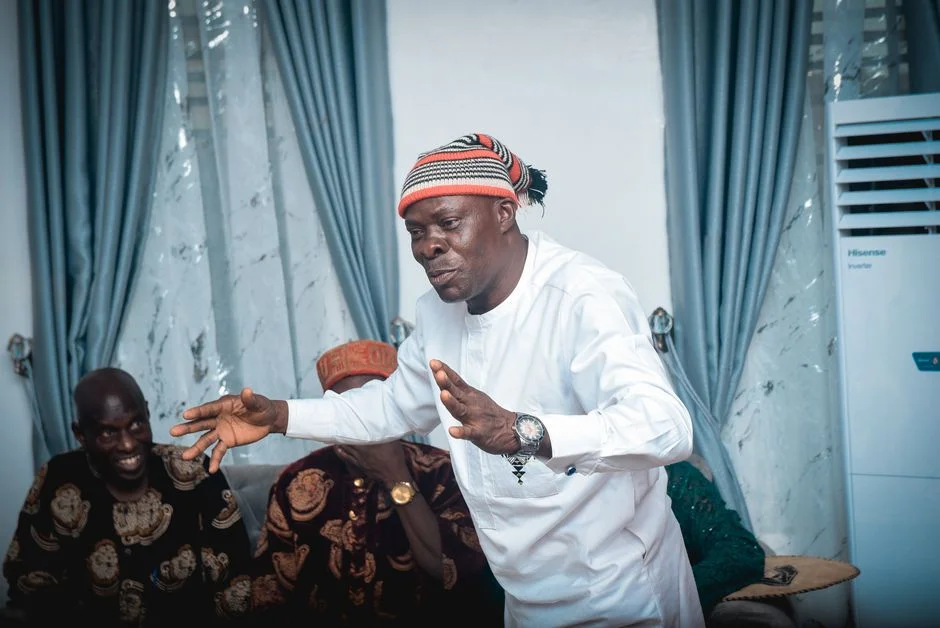
Delta State Governor Sheriff Oborevwori declared at a campaign rally in Asaba on Wednesday that voting against President Bola Tinubu would constitute evil, describing the President as family. The remarks, which drew applause from ruling party supporters, have sparked debate across Nigeria's oil-rich Delta region about the intersection of kinship politics and democratic accountability.
Governor Links Tinubu to Delta's Royal Household
Oborevwori made the controversial statement at a rally held at the Stephen Keshi Stadium in Asaba, Delta's capital. The governor, who governs Nigeria's third-largest oil-producing state, invoked a familial connection between the President and Delta's political establishment. "He is our in-law," Oborevwori told the crowd of several thousand supporters. "Voting against him will be evil."

First Lady Oluremi Tinubu was present at the event, further reinforcing the symbolic link between the Presidential family and Delta's governing elite. Sources at the rally indicated she received a warm reception from local party faithful.
Why the 'In-Law' Claim Matters in Delta Politics
The governor's language taps into Delta's complex web of political marriages and alliances. Senior APC officials confirmed that Tinubu's daughter married into a prominent Delta political family in 2023, creating formal kinship ties that Oborevwori now leverages publicly. Delta's political circles have long operated on personal relationships between elite families.
Political observers in Warri said the statement exposes how patronage networks dominate elections in the Niger Delta. "This isn't about policy or performance," said Eghosa Ogieva, a political analyst based in Warri. "It's about family loyalty trumping everything else."
Deltans React: Support and Criticism Divide
Responses from ordinary Deltans ranged from enthusiastic agreement to sharp condemnation. In Asaba markets, some traders expressed support for the President's infrastructure investments, while others warned that conflating family loyalty with electoral choice sets a dangerous precedent.
"My vote is my voice," said Blessing Okonkwo, a food vendor in the Asaba main market. "No governor should tell me what is evil at the ballot box." The sentiment echoed across social media platforms, where the hashtag #MyVoteMyVoice gained traction among young Delta residents.
Economic Stakes for Delta's Oil Communities
Delta produces approximately 500,000 barrels of crude oil daily, representing a significant share of Nigeria's total output. The state's relationship with the federal government directly impacts thousands of jobs in the oil and gas sector across communities in Warri, Ughelli, and Burutu.
Tinubu's administration has pursued petroleum sector reforms that have drawn mixed reactions. While some industry analysts credit the reforms with attracting new investment, community leaders argue that local content promises remain unfulfilled. The stakes are particularly high for oil-bearing communities that have long complained about environmental degradation and inadequate development returns.
Opposition Figures Push Back
PDP leaders in Delta quickly condemned the governor's remarks. Former Senate President David Mark, a PDP heavyweight from the state, issued a statement calling Oborevwori's comments "an assault on democratic values." Mark's statement called on Deltans to exercise independent judgment when voting.
The PDP's gubernatorial candidate in the last election, Ifeanyi Okowa, also weighed in through intermediaries, warning that statements conflating political loyalty with moral righteousness could inflame tensions ahead of the 2027 polls. Okowa, who served as governor before Oborevwori, maintains significant political support in the state.
Legal and Ethical Dimensions
Constitutional lawyers have questioned whether the governor's statements constitute electoral offences. Section 130 of the Electoral Act prohibits the use of religious or ethnic sentiment to influence voting. The National Assembly's electoral reform committee may face pressure to investigate whether Oborevwori's remarks violate these provisions.
Meanwhile, civil society organisations announced plans to monitor campaign rallies across Delta. The Civil Liberties Organisation called the statements "a crude attempt to weaponise kinship against democratic consciousness."
What Deltans Should Watch Next
Campaign season intensifies across Delta in the coming weeks. The governor is expected to hold at least six more rallies across the state's 25 local government areas. APC national chairman Abdullahi Umar Ganduje is scheduled to visit Asaba by mid-February, where he will address party faithful at a separate event.
Voters in Delta should watch for federal government announcements on infrastructure projects ahead of the elections. Historically, such announcements spike during campaign periods, raising questions about the timing of development spending. Independent monitors say they will track all public investments to ensure equal distribution across party lines.
The 2027 elections remain approximately nine months away. Deltans will ultimately decide whether familial appeals outweigh concerns about economic management, security, and community development at the polls.
See Also
- Senate to Investigate Cement Coys on Hike in Price
- Nnamdi Kanu’s Trial Resumes At High Court In Abuja
What is the latest news about delta governor backs tinubu as inlaw deltans brace for political crossroads?
Why does this matter for politics-governance?
What are the key facts about delta governor backs tinubu as inlaw deltans brace for political crossroads?