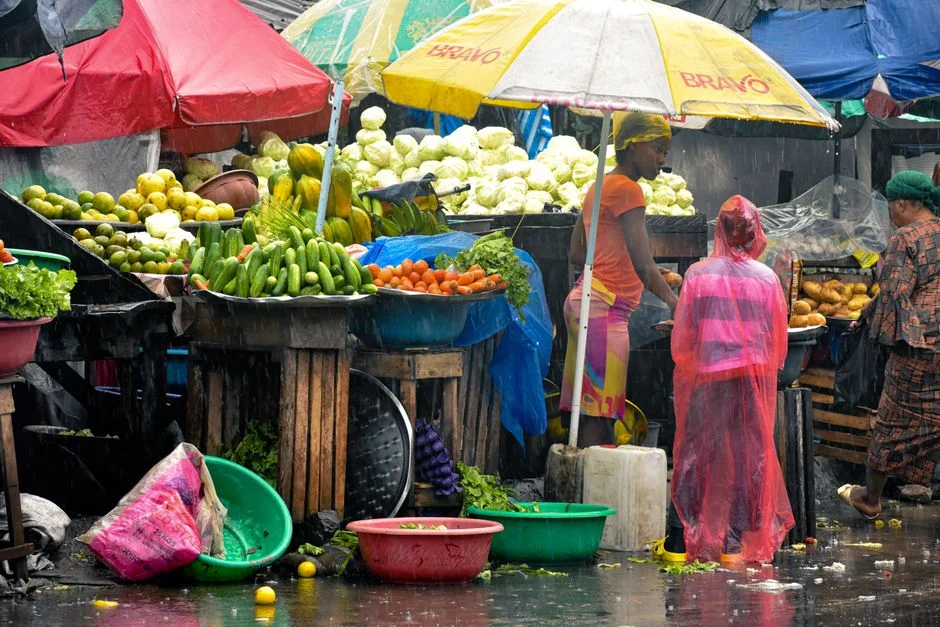
The African Development Bank released a stark assessment this week, revealing that poor infrastructure is costing the continent’s smallholder farmers up to $30 billion annually in lost revenue. This logistical failure directly impacts food prices and income stability for millions of households across Sub-Saharan Africa. The report emphasizes that without immediate intervention, the gap between production and market access will continue to widen, threatening regional food security.
Nigeria’s Farmer Faces a Pricey Journey to Market
For the average smallholder farmer in Nigeria, the distance to a viable market is often less about geography and more about the condition of the road connecting them. In many parts of the North Central region, a trip to sell tomatoes or maize can take three times longer than it should due to potholed highways and congested cross-border checkpoints. These delays mean that perishable goods arrive in cities like Abuja or Lagos already half-eaten by time and temperature.

The financial burden falls heavily on the producer. When transport costs rise, farmers are forced to either absorb the expense, reducing their net profit margins, or pass the cost on to consumers, fueling inflation. This dynamic creates a vicious cycle where farmers remain poor despite high yields, and urban dwellers pay premium prices for basic staples. The Agricultural Transformation Agenda has long recognized this bottleneck, yet the infrastructure deficit persists.
Recent data indicates that transport costs can account for up to 40% of the final price of agricultural produce in Nigeria. This figure is significantly higher than the global average, highlighting the inefficiency of the current supply chain. Such high overheads discourage investment in modern farming techniques, as the return on investment is often eroded before the harvest even reaches the buyer.
Why Infrastructure Fails Rural Communities
The root of the problem lies in decades of underinvestment in rural feeder roads. While major highways connecting state capitals have seen some improvement, the last-mile connectivity remains fragmented. Many rural communities rely on unpaved tracks that become impassable during the rainy season, effectively isolating farmers from markets for months at a time. This seasonal isolation forces farmers to sell their harvest at a discount to local middlemen who hold the keys to the main roads.
The Storage and Cold Chain Deficit
Beyond the roads themselves, the lack of adequate storage facilities exacerbates the problem. Without reliable cold chain infrastructure, farmers in Nigeria lose an estimated 30% of their produce post-harvest. This waste is particularly acute for high-value crops like tomatoes, onions, and leafy vegetables. The absence of silos and cold storage units means that supply is often inconsistent, leading to price volatility that shocks both buyers and sellers.
The integration of technology has been slow to penetrate these rural areas. While digital platforms have emerged to connect farmers with buyers, they struggle to function effectively when physical infrastructure is lacking. A farmer with a smartphone can find a buyer in Lagos, but if the truck carrying the goods gets stuck in Kaduna for two days, the digital advantage vanishes. Physical infrastructure remains the backbone of agricultural commerce.
Community Response: Adapting to the Bottleneck
Local communities are not waiting for federal intervention to solve every problem. In states like Oyo and Benue, farmer cooperatives are pooling resources to lease trucks and establish temporary storage hubs. These grassroots efforts demonstrate resilience but also highlight the scale of the challenge. Cooperatives can mitigate individual risk, but they lack the capital to undertake large-scale infrastructure projects like paving or electrification.
Women, who constitute a significant portion of the smallholder farming workforce, bear a disproportionate share of the logistical burden. They often walk long distances to fetch water and carry produce to local markets before the main transport arrives. This physical exertion reduces their time for other income-generating activities, such as processing or petty trading. Addressing logistical gaps is therefore also a gender equity issue in the Nigerian agricultural sector.
Local government areas have begun to experiment with targeted interventions. Some are offering subsidies for transport during peak harvest seasons to encourage farmers to hold onto their produce for better prices. These localized solutions provide immediate relief but require scaling up to achieve systemic change. The success of these pilot programs could offer a blueprint for broader national policy.
Economic Ripple Effects Across the Region
The impact of these logistical gaps extends far beyond the farm gate. When farmers earn less, their spending power in rural communities declines. This reduces demand for local goods and services, slowing down the broader rural economy. Schools, clinics, and shops in farming villages feel the pinch when the agricultural surplus fails to translate into cash flow. The ripple effect is a stagnation of rural development that keeps millions in a state of subsistence.
For urban consumers, the consequence is higher food inflation. Nigeria has battled double-digit inflation rates in recent years, with food prices leading the charge. Inefficient logistics are a primary driver of this trend. When the cost of moving a bag of rice from the farm to the table is high, the final consumer pays for it. This makes food security a central issue in the national economic debate.
The agricultural sector contributes significantly to Nigeria’s Gross Domestic Product, yet its potential is curtailed by these inefficiencies. Unlocking this potential requires more than just increasing yields; it demands a synchronized improvement in how produce moves. The current system favors large agribusinesses that can absorb logistics costs, leaving smallholders at a competitive disadvantage. Leveling the playing field is essential for inclusive growth.
Policy Shifts and Government Initiatives
The Nigerian government has acknowledged the severity of the logistics challenge. The Ministry of Agriculture and Rural Development has launched several initiatives aimed at improving rural infrastructure. These include the rehabilitation of feeder roads and the introduction of warehousing receipt systems. However, critics argue that the pace of implementation is too slow to match the growing population and changing climate conditions.
Public-private partnerships are emerging as a viable model for financing these projects. Private companies, recognizing the demand for reliable agricultural inputs and outputs, are investing in logistics hubs and transport fleets. These investments bring efficiency and technology to the sector. For instance, some logistics firms are using data analytics to optimize routes, reducing fuel consumption and delivery times. This innovation is crucial for making the supply chain more cost-effective.
Regional cooperation also plays a role. Nigeria shares borders with several West African countries, and cross-border trade is significant for agricultural products. Harmonizing logistics policies and improving border infrastructure can reduce transit times and costs. The Economic Community of West African States (ECOWAS) has made strides in this area, but implementation at the national level remains inconsistent. Coordination is key to unlocking the full potential of regional markets.
The Role of Technology in Bridging the Gap
Technology offers promising solutions to long-standing logistical challenges. Mobile money platforms are enabling faster payments for farmers, reducing the cash flow lag that often plagues smallholders. Digital marketplaces are connecting farmers directly with buyers, cutting out multiple layers of middlemen. These digital tools increase transparency and allow farmers to negotiate better prices. The adoption of technology is accelerating, driven by the increasing smartphone penetration in rural areas.
Drone technology is also being tested for delivering inputs and harvesting data in hard-to-reach areas. While still in its early stages, drones can provide real-time information on crop health and soil conditions, helping farmers make informed decisions. This data can also be used to optimize logistics, ensuring that transport is deployed where it is most needed. Innovation in this sector has the potential to transform the efficiency of the agricultural value chain.
However, technology alone is not a panacea. It must be supported by robust physical infrastructure. A digital platform is of little use if the road to the market is washed out. Therefore, a hybrid approach that combines digital innovation with physical infrastructure development is necessary. This integrated strategy can address both the information and physical bottlenecks that currently hinder smallholder farmers.
What Comes Next for Nigerian Agriculture
The path forward requires sustained commitment from both the public and private sectors. The African Development Bank’s report serves as a wake-up call for policymakers to prioritize logistics infrastructure. Immediate actions include accelerating the rehabilitation of rural feeder roads and expanding cold storage capacity. These investments will yield high returns by reducing post-harvest losses and lowering transport costs.
Stakeholders should watch for upcoming policy announcements from the Federal Ministry of Agriculture regarding infrastructure funding. The allocation of capital to rural logistics projects in the next fiscal budget will signal the government’s priority. Additionally, the performance of public-private partnerships in key agricultural corridors will provide insights into the effectiveness of collaborative models. Progress in these areas will determine whether smallholder farmers can truly unlock their market potential.
See Also
- Erika Kirk Slams Candace Owens Over Security Claims
- Sporting's Rui Borges Praises Trincão's Performance — What It Means for Team Dynamics