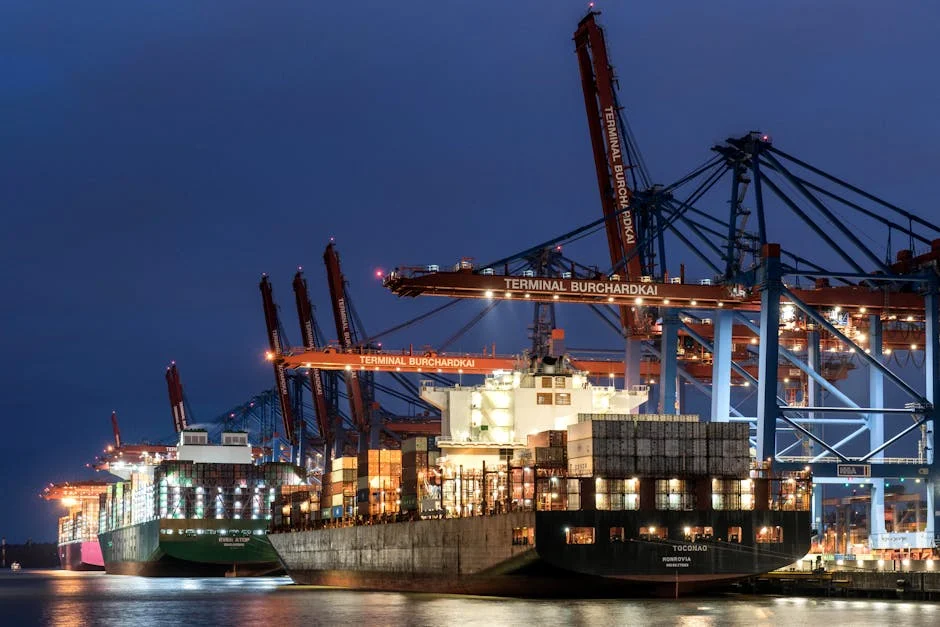
Transnet, the South African state-owned logistics and freight company, has begun reclaiming land in the Durban area to expand the city’s main port, triggering protests from local communities and concerns among freight forwarders. The move, announced in early April, involves the acquisition of 35 hectares of land in the industrial zone of Cato Ridge, a region heavily reliant on port-related jobs. The expansion is part of a broader $1.2 billion plan to increase the port’s capacity by 30% by 2026, aiming to boost trade with regional partners like Nigeria.
Community Displacement and Rising Costs
Residents in Cato Ridge, a working-class neighborhood near the port, have been given just two weeks to vacate their homes as Transnet prepares to start construction. Local activist and community leader Sipho Mbeki, who has lived in the area for over 20 years, described the move as “disastrous.” “We were never consulted. Our homes are being taken without compensation,” he said. The forced evictions have already displaced more than 200 families, with many moving to nearby townships like Hillbrow and Hilltop, where housing is already scarce.
The disruption has also affected local businesses. A survey by the Durban Chamber of Commerce found that 40% of small retailers in the area have seen a decline in foot traffic, with some reporting a 30% drop in sales. “We rely on the port workers and their families for our business,” said Thandiwe Mkhize, owner of a local grocery store. “Now, with the displacement, we’re struggling to survive.”
Impact on Freight Forwarders and Trade Routes
The expansion has raised concerns among freight forwarders, who manage the movement of goods between South Africa and its neighbors, including Nigeria. The Durban Port handles over 40% of South Africa’s container traffic, and any delays or disruptions in operations could affect shipping schedules. “The port is the lifeline for many of our clients,” said David Nkosi, a senior manager at TransGlobal Freight, a major logistics company based in Johannesburg. “If the expansion leads to congestion or higher tariffs, it will hit the cost of goods in Nigeria and other regional markets.”
Freight forwarders have also raised alarms about the potential for increased tariffs. The South African government has not yet confirmed whether the expansion will lead to higher port fees, but industry analysts warn that the move could push up the cost of imports and exports by 5–10%. “This will have a ripple effect on local economies,” said Nkosi. “Nigeria’s importers will pay more, and that could lead to inflationary pressures.”
Legal Challenges and Public Outcry
Transnet’s land acquisition has faced legal challenges from the South African Human Rights Commission, which has filed a petition arguing that the company did not follow proper consultation procedures. “The government has a duty to protect the rights of vulnerable communities,” said commission spokesperson Lindiwe Mkhize. “This action shows a clear disregard for those rights.”
Public protests have also intensified, with over 1,000 residents gathering outside Transnet’s headquarters in Pretoria last week. The demonstrations have been led by the Durban Port Workers’ Association, which claims the expansion will lead to job losses in the long term. “We support growth, but not at the cost of our livelihoods,” said association leader Zinhle Dlamini.
What’s Next for the Region?
As the construction begins, the focus remains on the social and economic fallout. The South African Department of Transport has promised to provide compensation to displaced families, but many remain skeptical. “We need concrete assurances,” said Mbeki. “This is not just about land — it’s about our future.”
Freight forwarders are also watching closely, with some considering alternative routes through other South African ports like Port Elizabeth and East London. The Nigerian government has not yet commented on the potential impact, but industry insiders warn that the situation could lead to higher import costs for consumers. “This is a wake-up call for regional trade policy,” said Nkosi. “We need better coordination and transparency.”
The next critical step will be the release of the full environmental and social impact assessment, expected by the end of June. Until then, the region remains in a state of uncertainty, with communities, businesses, and policymakers all bracing for the consequences of the expansion.