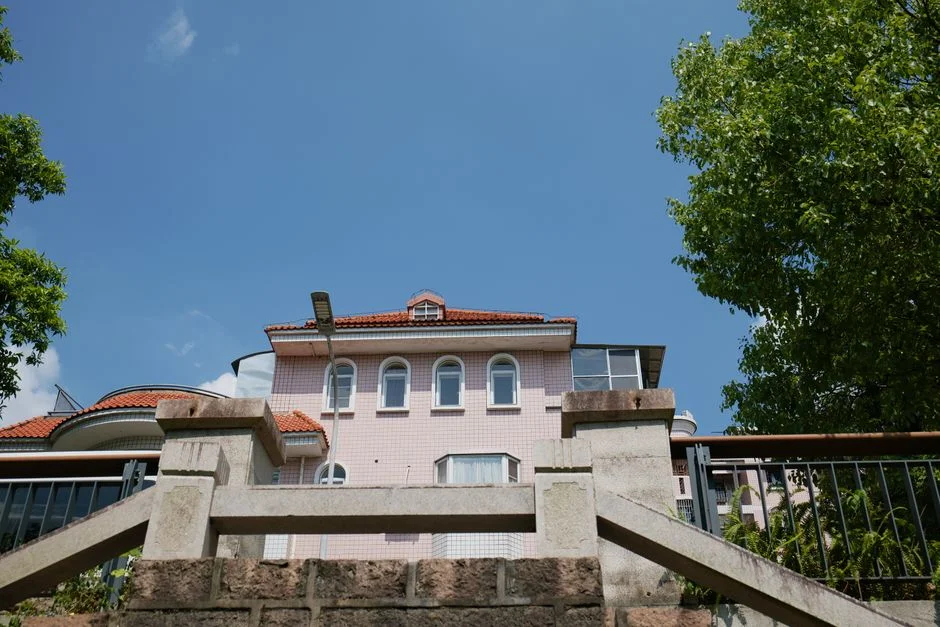
Happy City, once a thriving coastal settlement in Nigeria where fishing boats bobbed against wooden docks and families built homes just above the waterline, is now vanishing into the Atlantic Ocean. Residents who once called this community home are watching their streets, schools, and mosques disappear beneath rising seas, forced to abandon a place their grandparents helped create.
A community built on water
Happy City emerged decades ago as an informal settlement along Nigeria's coastline, where families from nearby communities established fishing camps and small trading posts. The settlement earned its name from the resilience and optimism of its residents, who adapted their lives to the rhythms of the Atlantic. At its peak, hundreds of families lived in stilted wooden homes that swayed gently above the water, connected by narrow walkways that served as streets.
The community grew into a self-sufficient hub. Local fishermen headed out before dawn, returning with catches that fed markets miles inland. Children attended classes in a concrete schoolhouse that locals had built by hand. A small mosque anchored the spiritual life of the community, its minaret visible above the treeline for kilometres in every direction.
Residents today speak of those years with a mixture of pride and grief. "My father helped build the first houses here," one elder told local media, declining to give his name as he gathered what remained of his belongings. "He believed the sea would always be our friend."
The ocean starts to claim its territory
Within the past decade, the relationship between Happy City and the Atlantic shifted dramatically. What once provided livelihoods began taking homes. Seasonal flooding grew more severe, and each year the high tide mark crept further inland. Where children once played on solid ground, water now pools permanently.
The concrete schoolhouse that served dozens of students stands partially submerged. During high tide, seawater flows freely through what was once a busy classroom. The mosque's foundation has cracked, its minaret tilting at an angle that locals describe as a warning nobody wanted to read.
Photographs taken by community members and reviewed by regional media show the transformation starkly. Images from 2018 display intact households and visible shoreline. Recent photographs show nothing but water where buildings once stood.
Residents flee as homes disappear
The exodus from Happy City has accelerated sharply in recent months. Families have loaded what possessions they can salvage onto small boats, transporting them to higher ground in nearby towns. Many have lost everything more than once as flooding destroyed successive shelters before they could establish new ones elsewhere.
"The sea took everything away," one resident said, using words that have become a grim refrain throughout the community. She described watching her front door submerge during a particularly violent storm last year. "We ran with the children and never went back."
Displaced residents have scattered across several communities along the coast, straining existing infrastructure and creating tensions over limited resources. Temporary shelters have sprung up in nearby settlements, but aid organisations warn these arrangements are unsustainable without broader government intervention.
Why this is happening now
Coastal erosion along Nigeria's shoreline has worsened significantly over the past twenty years, driven by a combination of factors that scientists and local authorities acknowledge but have struggled to address comprehensively. Rising global sea levels have contributed to increased flooding, but local factors have amplified the damage considerably.
Deforestation along riverbanks has reduced natural barriers that once absorbed storm surge. Sand mining operations, some conducted illegally, have stripped away protective beaches. Construction projects farther inland have altered drainage patterns, funnelling water toward coastal communities rather than dispersing it naturally.
The Nigerian government has acknowledged the crisis in broad terms, with officials noting that several coastal communities face similar threats. However, specific interventions for Happy City have remained limited, frustrating residents who say early warning signs were visible for years before meaningful action was considered.
What comes next
Scientists studying the coastline have offered grim projections. Without significant intervention, experts say additional communities along this stretch of coast face similar risks within the coming decade. The rate of erosion has exceeded earlier predictions, suggesting the timeline for action has grown shorter than previously estimated.
Some residents have organised to document their losses systematically, creating records they hope will support future claims for assistance or relocation support. Others have simply stopped waiting for help, making their own arrangements to rebuild further inland despite the economic and social costs of leaving familiar ground.
For those who remain in Happy City, even temporarily, each morning brings the same ritual: checking the water level, assessing which structures survived the night, and deciding what, if anything, can still be saved. The Atlantic continues its slow advance, indifferent to the calculations of those trying to stay ahead of it.
Residents and local advocates say they will continue pressing authorities for assistance through whatever channels remain available. The next rainy season looms months away, and the community knows what that means. Those who can leave are leaving. Those who cannot are waiting, watching the horizon, and wondering how much time remains before the water claims what little stands between them and the sea.
See Also
- Gehlot Slams Indian Centre Over Silence on U.S. Iranian Warship Attack — What It Means for Africa
- South Africa Braces for Rain as Western Cape and Eastern Cape Face Wet Week