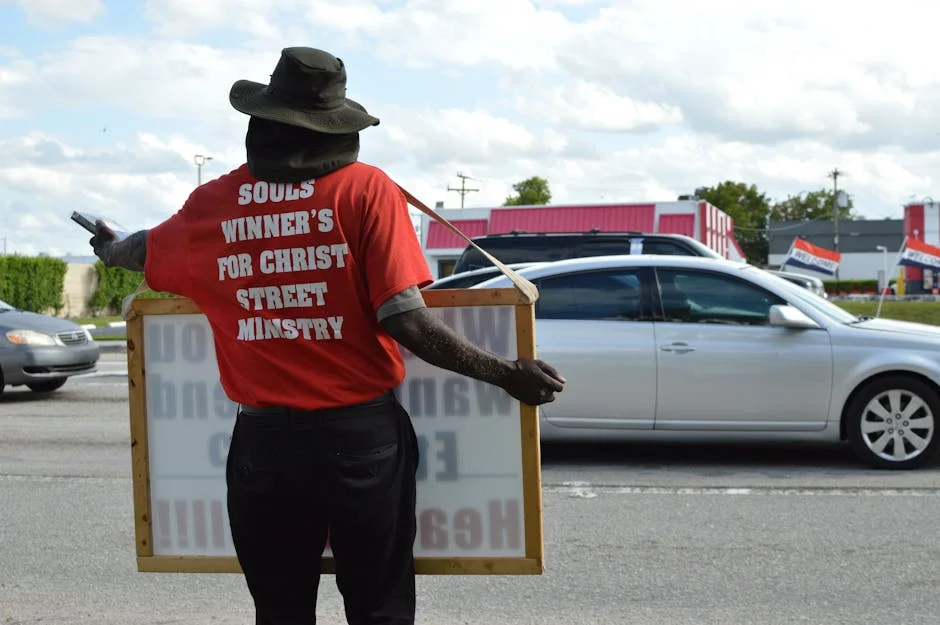
Nigeria’s Ministry of Religious Affairs has launched a nationwide Easter prayer campaign, aiming to foster national unity and spiritual renewal ahead of the Easter holiday. The initiative, announced on March 20, involves over 10,000 churches across the country, with a focus on regions like Lagos, Kano, and Abuja. The campaign is part of a broader effort to address rising social tensions and promote peace in a nation grappling with economic and political challenges.
Easter Prayer Campaign Sparks National Dialogue
The campaign, led by the National Council of Churches of Nigeria (NCCN), includes interfaith prayer sessions, community outreach, and public service announcements. It follows a series of regional conflicts and economic instability, with the NCCN citing a 25% increase in intercommunal violence in 2024 as a key reason for the initiative. The move has drawn both praise and criticism, with some religious leaders hailing it as a necessary step toward healing, while others argue it could deepen divisions.

“Easter is not just a religious observance; it’s a time for reflection and renewal,” said Reverend Adebayo Adeyemi, a prominent Christian leader in Lagos. “We need to come together as a nation, not just as believers.” The campaign has also been endorsed by President Bola Tinubu, who called for a “spirit of reconciliation and solidarity” in a public address on March 22.
Context: Faith and Development in Nigeria
Nigeria’s religious diversity, with over 50% of the population identifying as Christian and 50% as Muslim, often leads to tensions, especially in the north-south divide. The Easter campaign is part of a growing trend where religious institutions are stepping into the gap left by weak governance. According to a 2023 report by the Nigerian Bureau of Statistics, 70% of citizens believe religion plays a key role in national development, though only 15% trust the government to address social issues effectively.
Development experts argue that faith-based initiatives can complement state efforts, particularly in areas like education and health. For example, the NCCN operates over 500 schools and 200 clinics across the country. However, critics warn that such movements may not address systemic issues like corruption, unemployment, or regional inequality. “Religion can inspire, but it can’t replace good governance,” said Dr. Nia Nwosu, a political analyst at the University of Ibadan.
Easter Prayer and the Path to National Reconciliation
The campaign has sparked renewed calls for national reconciliation, especially in conflict-affected areas like the Middle Belt and the Niger Delta. In Kogi State, where clashes between farmers and herders have intensified, local leaders have joined the prayer initiative, hoping to restore peace. “This is a chance to start over,” said Governor Aminu Tambuwal, who organized a joint Christian and Muslim prayer session in May 2024.
The NCCN has also partnered with the Federal Road Safety Corps to conduct road safety campaigns during the Easter period, highlighting the intersection of faith and public welfare. With over 200,000 road accidents reported in 2023, the initiative aims to reduce fatalities through community awareness and religious messaging.
Challenges and Opportunities
The Easter prayer campaign faces several challenges, including uneven participation across regions. While urban centers like Lagos and Abuja have seen strong engagement, rural areas remain underrepresented. Additionally, the initiative has not yet addressed the root causes of violence and poverty, which are deeply entrenched in Nigeria’s political and economic systems.
Despite these hurdles, the campaign has created new opportunities for dialogue and collaboration. It has brought together religious leaders, civil society groups, and government agencies in ways not seen before. “This is just the beginning,” said Bishop Samuel Chukwuma, a Catholic leader in Enugu. “We need to build on this momentum.”
What’s Next for Nigeria’s Easter Initiative?
As the Easter period approaches, the focus will shift to the outcomes of the prayer campaign. Religious leaders are urging citizens to maintain the spirit of unity beyond the holiday, while the government is expected to announce new policies to address long-standing challenges. The next major event will be the Easter Sunday services on April 7, followed by a national consultation on reconciliation scheduled for April 15.
For now, the campaign serves as a reminder of the power of faith in shaping public discourse and social cohesion. Whether it leads to lasting change remains to be seen, but for many in Nigeria, the Easter prayer is a symbol of hope in a time of uncertainty.