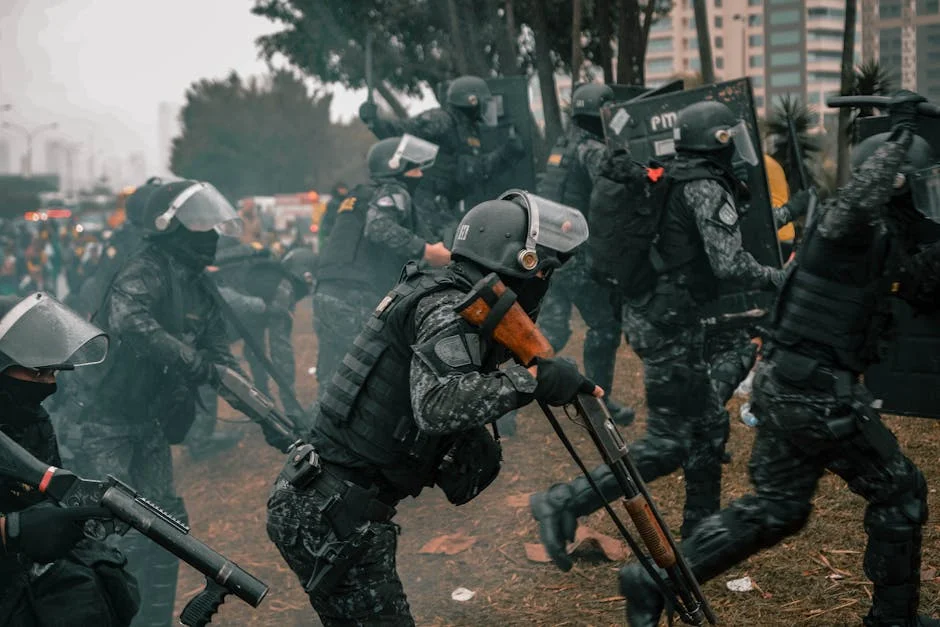
A viral video showing Nigerian police officers struggling with two men over a firearm has been confirmed as a clip from 2022, not a recent incident. The footage, which has circulated widely on social media platforms like Twitter and WhatsApp, was initially believed to be from the Lagos State Police Command in late 2023. This misidentification has sparked unnecessary anxiety among citizens who feared a resurgence of armed conflicts in urban centers.
The Origin of the Viral Footage
The video in question features uniformed officers grappling with two suspects near a busy intersection. One of the men is seen holding a pistol, while the other appears to be trying to retrieve a second weapon from a nearby vehicle. The chaotic scene has been shared thousands of times, with many users captioning it as evidence of rising crime rates in major Nigerian cities. However, the timeline presented by social media users was incorrect.
Fact-checking organization Africa Check investigated the claim and traced the original source of the video. Their research revealed that the footage was first uploaded to a YouTube channel in March 2022. The video was originally shared by a local news outlet in Lagos, identifying the incident as a clash between the Lagos State Police Mobile Command (Mopol) and armed suspects in the Ikeja area. The date stamp on the original file confirms the 2022 timeline, contradicting recent social media narratives.
The misattribution of the video highlights a common problem in digital media consumption in Nigeria. Users often share content without verifying the date or location, leading to confusion and sometimes panic. In this case, the video was re-shared in early 2024, with some users claiming it showed a fresh incident involving the Lagos State Police Command. This lack of verification has led to repeated cycles of misinformation.
Impact on Public Perception and Trust
The spread of outdated videos as recent news directly affects how citizens perceive security in their communities. When people believe a violent incident is happening now, it can lead to immediate behavioral changes. Residents might avoid certain areas, close businesses earlier, or even arm themselves for protection. This reaction, while natural, is often based on incomplete or incorrect information.
For the Nigerian Police Force, such misinformation can damage public trust. When the public believes the police are struggling with suspects in a recent incident, it can fuel narratives of inefficiency or corruption. However, if the incident is years old, the context of the police response may have already been explained or resolved. The re-emergence of the video without context strips away this nuance, leaving the public with a raw, often negative, impression.
Communities in Lagos and other major cities are particularly vulnerable to this type of digital noise. With high social media penetration, news travels fast, but verification often lags. This gap allows rumors to take root before facts can catch up. The result is a public that is increasingly skeptical of both traditional and digital media sources, making it harder for authorities to communicate effectively during actual crises.
How Misinformation Spreads in Nigeria
The mechanics of viral misinformation in Nigeria are well-documented. Social media algorithms favor engagement, and emotional content like a police struggle with a firearm generates high interaction. Users share the video to their WhatsApp groups, Twitter timelines, and Facebook feeds, often adding their own commentary. This commentary can include unverified details about the suspects, the location, or the outcome of the incident.
Once the video gains traction, it becomes difficult to correct the narrative. Even after a fact-check is published, the initial post may have already been seen by thousands. The "echo chamber" effect means that people share the video with others who already believe the narrative, reinforcing the misconception. This cycle is exacerbated by the speed at which content is consumed on mobile devices, where users often scroll past headlines without reading the full story.
Fact-checkers like Africa Check play a crucial role in breaking this cycle. By providing clear, evidence-based corrections, they help restore some level of accuracy to the public discourse. However, their impact is often limited by reach. While their reports are detailed, they may not always reach the same audience that saw the original viral post. This gap remains a significant challenge for media literacy efforts in the region.
The Role of Fact-Checking Organizations
Organizations like Africa Check have become essential tools for navigating the Nigerian media landscape. Their work involves tracking viral claims, verifying sources, and publishing detailed reports that explain the truth behind the headlines. In the case of the police video, Africa Check’s investigation provided a clear timeline and source attribution, effectively debunking the recent claim.
The process of fact-checking is not always quick. It requires digging through social media archives, contacting original sources, and analyzing metadata. For the police video, Africa Check had to locate the original YouTube upload, compare it with recent shares, and confirm the date of the incident. This level of detail is what separates a simple correction from a comprehensive fact-check.
These organizations also educate the public on how to verify information. They often publish guides on how to reverse-image search videos, check dates, and identify reliable sources. This educational component is vital for long-term improvement in media literacy. By empowering citizens with tools to verify information, fact-checkers help reduce the reliance on second-hand news.
Local Economy and Social Stability
The impact of misinformation extends beyond public perception; it can also affect local economies and social stability. In Lagos, for example, a viral video of a police struggle can lead to a temporary slowdown in commercial activity. Shop owners might close earlier, commuters might choose alternative routes, and investors might hesitate to expand in areas perceived as unstable. These reactions, while short-term, can have cumulative effects on the local economy.
Furthermore, misinformation can exacerbate social tensions. If a video is interpreted as showing police brutality or inefficiency, it can fuel protests or community unrest. In a country with a diverse population and varying levels of trust in institutions, such tensions can quickly escalate. The re-emergence of the 2022 police video, therefore, was not just a media error but a potential social trigger.
Communities that are more media-literate are better equipped to handle these challenges. When citizens know how to verify information, they are less likely to react impulsively to viral content. This calmness can help maintain social order and economic stability, even in the face of negative news. Promoting media literacy is, therefore, a key strategy for building resilient communities.
What Citizens Can Do to Verify News
Given the prevalence of viral misinformation, citizens in Nigeria can take several steps to verify news before sharing it. One effective method is to use reverse-image search tools. By uploading a screenshot of the video or photo to a search engine, users can often find the original source and date. This simple step can reveal whether a video is recent or from years ago.
Another important step is to check the date and location details. Viral posts often lack specific details, or they include vague references like "yesterday" or "in Lagos." By looking for official statements from the relevant authorities, such as the Lagos State Police Command, citizens can confirm whether an incident actually occurred. Official social media accounts are often updated in real-time, providing a reliable source of information.
Finally, citizens should be cautious of emotional language in captions. Viral posts often use dramatic words to grab attention, such as "shocking," "rare," or "breaking." While these words are not always inaccurate, they can bias the reader’s perception. By reading the full context and comparing it with multiple sources, citizens can form a more balanced view of the situation.
Looking Ahead: The Future of Digital Verification
The case of the 2022 police video underscores the need for continuous effort in digital verification. As social media platforms evolve, so do the methods of misinformation. New features, such as short-form video clips and stories, make it easier for content to spread quickly but also harder to trace its origin. Fact-checking organizations must adapt to these changes to remain effective.
For the Nigerian Police Force, this incident highlights the importance of proactive communication. By providing timely and detailed updates on incidents, the police can reduce the space for rumors to grow. This might involve using social media more effectively to share official statements, photos, and videos of recent incidents. Transparency can help build trust and reduce the impact of misinformation.
Citizens should continue to monitor social media trends and rely on verified sources for news. The next time a viral video circulates, take a moment to check the date and source. This small action can help reduce the spread of misinformation and contribute to a more informed and stable society. Watch for upcoming reports from Africa Check and other fact-checking bodies to stay updated on the latest claims.
See Also
- Multichoice Warns of Possible Price Hikes – What It Means for Subscribers in Nigeria
- Burna Boy and Shakira Ignite Nigeria With FIFA 2026 Anthem
For the Nigerian Police Force, this incident highlights the importance of proactive communication. Local Economy and Social Stability The impact of misinformation extends beyond public perception; it can also affect local economies and social stability.
What is the latest news about africa check debunks viral police video it is from 2022?
Why does this matter for education?
What are the key facts about africa check debunks viral police video it is from 2022?