Satellite images obtained by Verify, an independent fact-checking organisation, show that Israeli forces have demolished over 300 homes in Lebanese villages since March, according to a recent report. The destruction has been concentrated in the northern regions of Lebanon, particularly in the village of Mzal, where residents have reported increased military activity and displacement. The scale of the damage has raised concerns among local communities, who are struggling to cope with the humanitarian fallout.
Scale of Destruction Revealed by Satellite Imagery
Verify, a leading verification platform, used high-resolution satellite data to track the destruction in the region. The images, captured between March and April, show extensive damage to residential areas, with entire neighborhoods reduced to rubble. The data has been verified by independent experts, confirming the severity of the situation.
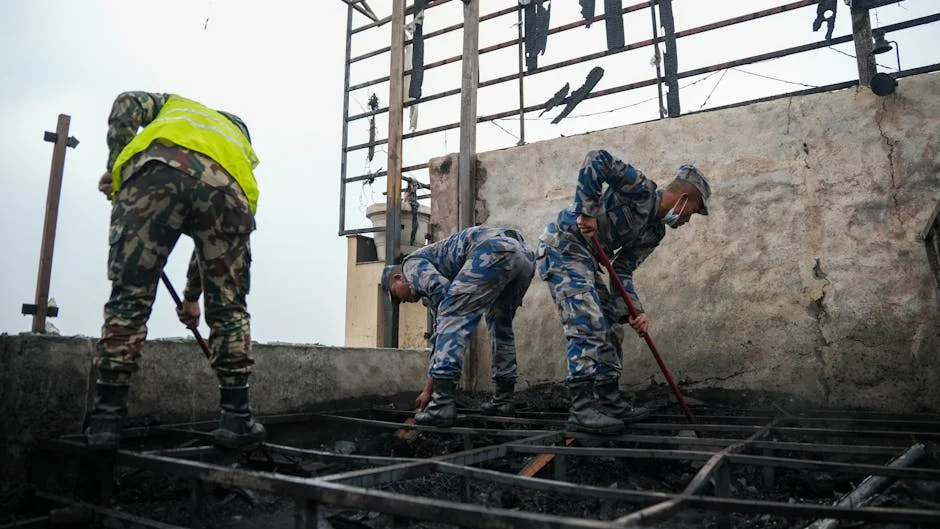
The destruction has had a direct impact on the daily lives of Lebanese citizens. In Mzal, a village near the border with Israel, residents have reported a sharp increase in displacement. Local authorities estimate that over 1,500 families have been forced to flee their homes, with many seeking shelter in nearby towns. The lack of infrastructure and resources has made it difficult for these displaced families to rebuild their lives.
Humanitarian Crisis Deepens
The destruction has led to a worsening humanitarian crisis in the region. The Lebanese Red Cross has reported a surge in requests for aid, including food, water, and medical supplies. In the town of Tripoli, which has seen a large influx of displaced families, local clinics are operating beyond capacity. Dr. Samir Faris, a local physician, said, “The situation is dire. We are seeing a lot of children with malnutrition and injuries from the bombings.”
Local communities have also experienced economic disruption. Many residents in the affected villages relied on agriculture and small businesses for their livelihoods. With homes and farmland destroyed, families are facing financial instability. In the village of Bint Jbail, where 80% of the population was displaced, local merchants report a 70% drop in sales. “Without our homes, we can’t work or sell anything,” said Ahmed Al-Khatib, a former farmer.
Regional Tensions and International Response
The destruction has intensified regional tensions, with Lebanon condemning the attacks as a violation of international law. The Lebanese Ministry of Foreign Affairs issued a statement calling on the international community to intervene and protect civilian populations. “This is a direct threat to our sovereignty and the safety of our people,” said Minister of Foreign Affairs, Dory Chamoun.
International organisations have also raised concerns. The United Nations Office for the Coordination of Humanitarian Affairs (OCHA) has called for an immediate investigation into the attacks. In a report released in April, OCHA noted that the destruction has created a “severe humanitarian emergency” in the region. “The international community must act now to prevent further loss of life and displacement,” said a spokesperson for OCHA.
Impact on Local Economy and Daily Life
The economic consequences of the destruction are widespread. In the town of Koura, where many displaced families have relocated, local businesses are struggling to stay afloat. A survey conducted by the Lebanese Economic Research Institute found that 65% of small businesses in the region have seen a significant decline in revenue. “Without customers, we can’t pay our employees or suppliers,” said Leila El-Khoury, owner of a local grocery store.
The destruction has also disrupted access to education and healthcare. In Mzal, the local school has been damaged beyond repair, forcing children to travel long distances to attend classes. Health centres in the area have also been affected, with some closed due to safety concerns. “Our children are missing out on their education, and our elders are not getting the care they need,” said a local community leader, Fawzi Al-Khatib.
What Comes Next for the Region?
As the conflict continues, the focus is shifting to the next phase of the crisis. The Lebanese government has announced plans to rebuild damaged areas, but funding remains a challenge. International aid is expected to play a critical role, with the World Bank and the European Union pledging support. However, the timeline for reconstruction remains uncertain.
For now, the people of Mzal and surrounding villages remain in limbo. With no immediate resolution in sight, the humanitarian and economic toll will likely continue to grow. Citizens and communities in the region are watching closely, hoping for stability and a return to normalcy.