Sudan's ongoing civil war, now in its third year, has seen gold become a central battleground, with fighting intensifying around key mining regions. The conflict has spilled across borders, affecting communities in neighboring Nigeria, where traders and families rely on cross-border flows of goods and people. The situation has raised alarms among regional leaders and local officials, who fear the violence could destabilize the already fragile economic conditions in the region.
Sudan's Gold as a War Economy
Gold mining has become a major source of funding for warring factions in Sudan, with reports indicating that over 70% of the country’s gold production is now controlled by armed groups. The Darfur region, a key mining area, has seen increased clashes between the Sudanese Armed Forces (SAF) and the Rapid Support Forces (RSF). This has led to a sharp rise in displacement, with over 800,000 people fleeing their homes since early 2023, according to the United Nations.
Roula Merhej, a journalist with Africanews, has reported from the border areas between Sudan and Nigeria, noting that the conflict has disrupted trade routes. “Local traders in Kano and Katsina are struggling as smuggling routes become more dangerous,” she said. “Gold from Sudan used to flow freely into Nigeria, but now it’s being intercepted by armed groups, leading to higher prices and fewer supplies.”
Impact on Nigerian Communities
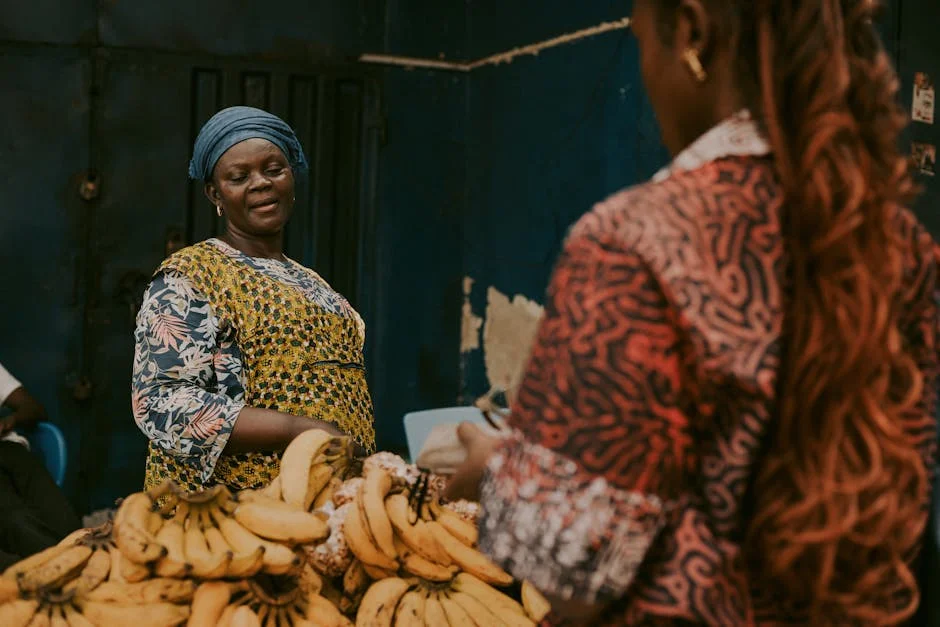
Communities in northern Nigeria, particularly in Kano and Katsina states, have been hit hard by the instability. These regions have long relied on cross-border trade with Sudan, and the disruption has led to inflation in local markets. A recent report by the Nigerian Bureau of Statistics showed a 12% increase in the price of gold jewelry in these areas since the beginning of 2024.
The impact extends beyond trade. Many families in northern Nigeria have relatives in Sudan, and the conflict has made it harder for them to send money or visit. “I haven’t seen my brother in over a year,” said Amina Musa, a shopkeeper in Kano. “He was working in a gold mine in Darfur, but now the area is too dangerous.”
Regional Response and Concerns
The African Union has called for urgent action to stabilize Sudan, warning that the gold-driven conflict could lead to a wider regional crisis. The Economic Community of West African States (ECOWAS) has also expressed concern, with a statement from its chair, former Nigerian President Goodluck Jonathan, urging regional leaders to increase diplomatic efforts.
Local leaders in Nigeria are also taking steps to mitigate the fallout. The Kano State government has launched a program to support small-scale traders affected by the disruption, while community groups are organizing relief efforts for displaced families. “We can’t ignore what’s happening in Sudan,” said Kano State Governor Abba Yusuf. “It’s affecting our people directly.”
Humanitarian and Economic Strains
The humanitarian toll is severe. The UN has reported that over 1.5 million people in Sudan are facing acute food insecurity, with many relying on cross-border aid. This has placed additional pressure on Nigeria’s border regions, where aid workers and NGOs are struggling to meet demand.
Economically, the situation is equally troubling. Nigeria’s central bank has warned that the instability could lead to a slowdown in trade, particularly in the northern states. “We are seeing a decline in cross-border transactions,” said a spokesperson for the Central Bank of Nigeria. “This could have long-term consequences for local economies.”
What’s Next for the Region?
Regional leaders are set to meet in Addis Ababa next month to discuss a coordinated response to the crisis. The meeting comes as the UN Security Council prepares to vote on a resolution calling for an immediate ceasefire in Sudan. Meanwhile, local communities in Nigeria are bracing for continued uncertainty, with many hoping for a swift resolution to the conflict.
The situation remains fluid, and experts warn that without immediate action, the humanitarian and economic fallout could worsen. For now, families in Kano and Katsina are watching closely, hoping that the next few weeks will bring some relief from the chaos that has engulfed their neighbors to the north.
See Also
- Kano Deputy Governor condoles Shanono/Bagwai LGAs over death of Lawmaker, Halilu Kundila
- Steenhuisen Exposes Government's Losses on FMD Vaccines — What It Means for Nigeria
The situation remains fluid, and experts warn that without immediate action, the humanitarian and economic fallout could worsen. Local leaders in Nigeria are also taking steps to mitigate the fallout.