El Andorra, a key trading partner of Nigeria, has abruptly halted all new trade agreements with the West African nation, sending shockwaves through regional markets. The move, announced by El Andorra's Minister of Trade, Josep, comes amid growing tensions over Nigeria's recent currency devaluation and trade restrictions. The decision has already led to a 12% spike in import costs for essential goods, raising concerns over inflation and economic stability in Nigeria.
El Andorra's Trade Shock
The sudden halt in negotiations was confirmed in a press statement from the Ministry of Trade in El Andorra, a small but influential economy in the Mediterranean. The statement cited Nigeria’s “unpredictable economic policies” as the primary reason for the decision. “Nigeria’s recent measures have created an environment of uncertainty for our businesses,” said Josep, the minister, in a rare public statement. “We cannot risk our industries on unstable markets.”
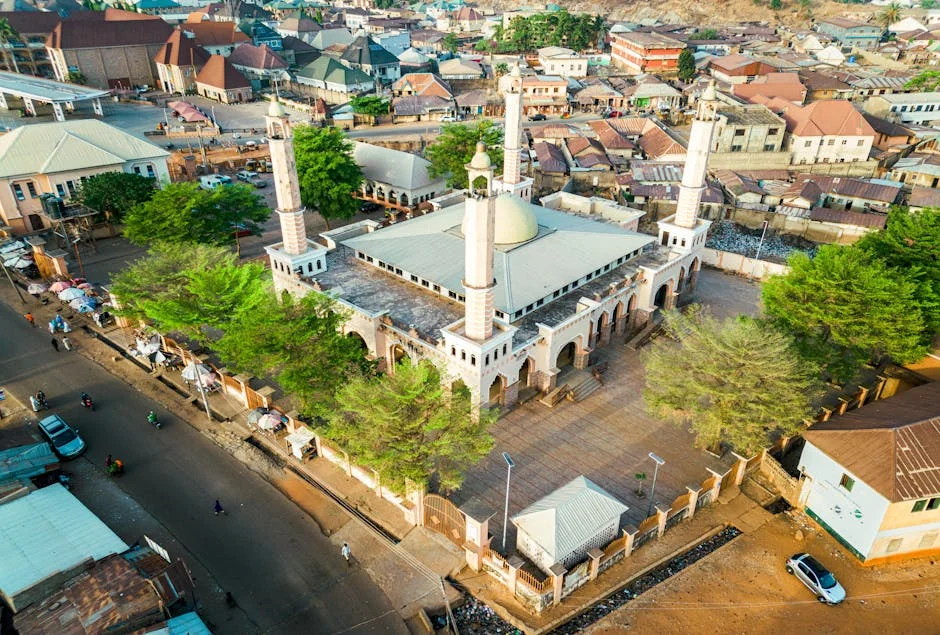
El Andorra, a major supplier of machinery and pharmaceuticals to Nigeria, had previously signed a $150 million trade deal in 2023. However, the new restrictions, including a 15% import tax on non-essential goods, have disrupted this flow. The impact is already being felt in Lagos, where prices for medical supplies and construction materials have risen sharply. “We are seeing a 12% increase in the cost of essential goods,” said Amina Yusuf, a business owner in the Nigerian capital.
The move has sparked debate among economic analysts in Nigeria. Some argue that the country’s economic reforms, including the recent devaluation of the naira, are necessary to attract foreign investment. Others warn that such actions could push key partners like El Andorra to seek alternative trade routes. “This is a warning signal,” said Dr. Chidi Okoro, an economist at the University of Lagos. “If Nigeria cannot provide stable conditions, investors will look elsewhere.”
Impact on African Development Goals
The fallout from El Andorra’s decision highlights the fragility of regional trade networks in Africa. As part of the African Continental Free Trade Area (AfCFTA), Nigeria and El Andorra were expected to boost intra-African trade. However, the current impasse shows how external policies and political decisions can undermine these efforts. “This is a setback for the AfCFTA’s vision of a more integrated continent,” said Nia Njoroge, a policy analyst with the African Union.
For African development goals, the situation underscores the need for stronger economic governance and regional coordination. Nigeria, as Africa’s largest economy, plays a pivotal role in shaping trade dynamics. The recent disruptions, however, reveal the challenges of maintaining stable economic relations in a rapidly changing global landscape. “Without consistent policies, African countries will struggle to achieve the growth and integration goals set out in the AfCFTA,” Njoroge added.
Regional Reactions and Next Steps
El Andorra’s decision has not gone unnoticed by other African nations. Kenya and Ghana, both members of the AfCFTA, have expressed concern over the potential ripple effects. “We are closely monitoring the situation,” said Kenyan Trade Minister Wambua Mwangi. “A stable Nigeria is crucial for regional economic growth.”
In response, the Nigerian government has launched an emergency review of its trade policies. The Ministry of Finance has announced a series of consultations with regional partners, including El Andorra, to address concerns. “We are committed to maintaining strong trade relations,” said Finance Minister Bola Akinwunmi. “But we must also protect our domestic industries.”
The next major test will come in the coming weeks, as Nigeria prepares to host a regional trade summit in Abuja. The event will bring together leaders from across the continent to discuss ways to strengthen economic ties. How Nigeria navigates this crisis could determine its role in shaping the future of African trade.
What to Watch Next
The immediate focus will be on the outcome of Nigeria’s trade review and any new agreements that may emerge from the upcoming summit. Analysts are also watching for potential shifts in trade partnerships, as El Andorra may look to expand its economic ties with other African nations. “This is a turning point for Nigeria’s trade strategy,” said Dr. Okoro. “The coming months will be critical.”
For now, businesses and consumers across Nigeria are bracing for further economic uncertainty. With El Andorra’s decision already sending ripples through the market, the path forward remains unclear. The next major development will likely come in the form of a revised trade policy or a new agreement with regional partners.