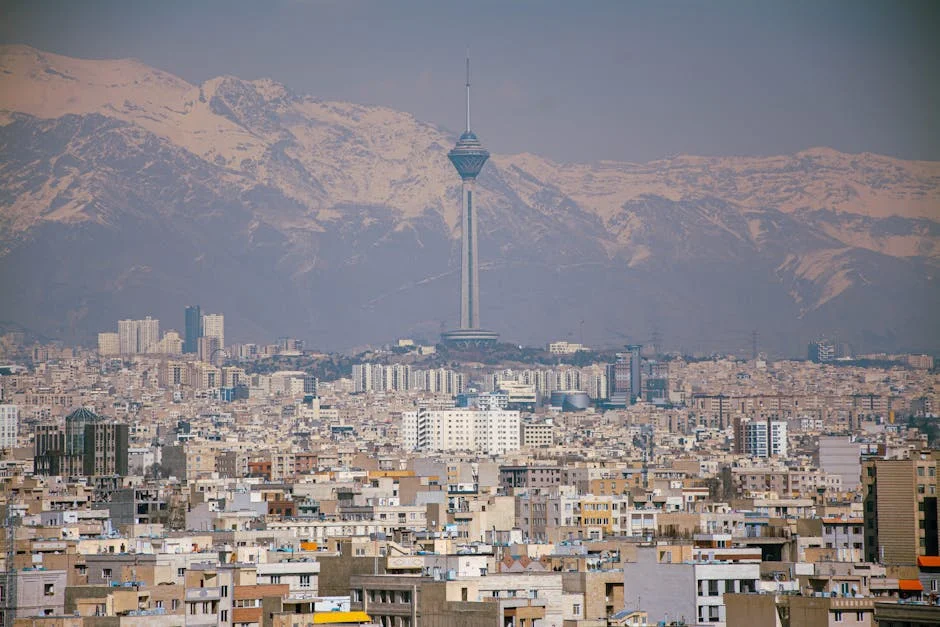
The Strait of Hormuz, a narrow waterway between Iran and Oman, has been dubbed a "million-year accident" due to its geological formation, but its strategic importance is reshaping global and African trade dynamics. As one of the world’s most critical maritime chokepoints, the strait handles nearly a third of global oil shipments, making it a focal point for geopolitical tensions and economic vulnerability. For Africa, where energy and trade routes are vital to development, the strait’s stability directly impacts regional growth, infrastructure, and energy security.
Geological Origins and Strategic Significance
The Strait of Hormuz was formed over millions of years by tectonic shifts, creating a narrow passage between the Persian Gulf and the Arabian Sea. Its strategic value emerged in the 20th century as global energy demand surged, with the strait becoming a lifeline for oil exports from the Middle East. Today, over 20 million barrels of oil pass through it daily, underscoring its role in global markets. For African nations, particularly those reliant on oil imports, disruptions here can trigger price spikes and supply shortages, directly affecting economic planning and development goals.

Analysts note that the strait’s geopolitical tensions—exacerbated by conflicts in the Middle East and sanctions on Iran—create uncertainty. In 2023, attacks on tankers near the strait raised alarms about maritime security, highlighting the fragility of global supply chains. For Africa, where 60% of countries depend on imported crude, such instability threatens energy security and inflation, complicating efforts to achieve the UN’s Sustainable Development Goals (SDGs), particularly clean energy and economic growth.
Hormuz’s Impact on African Trade Routes
African trade routes are heavily dependent on the Strait of Hormuz, with many nations exporting raw materials and importing manufactured goods via the Suez Canal and the Arabian Sea. Nigeria, Africa’s largest economy, relies on the strait for 70% of its oil imports, according to the International Energy Agency. Any closure or disruption could paralyze industries, worsen fuel shortages, and strain public services. Similar vulnerabilities exist in countries like Kenya and South Africa, which use the strait for container shipping and raw material imports.
The strait’s role extends beyond energy. It is a critical link for agricultural exports, such as Ghana’s cocoa and Egypt’s cotton, which depend on global markets. Delays or increased shipping costs due to geopolitical tensions could erode Africa’s competitive edge, hindering economic diversification—a key pillar of the African Union’s Agenda 2063. Experts warn that without alternative routes or regional infrastructure investments, African economies remain hostage to external volatility.
Nigeria’s Energy and Economic Vulnerabilities
Nigeria’s reliance on the Strait of Hormuz underscores broader challenges in African energy policy. The country’s refineries, which operate at less than 40% capacity, depend on imported refined petroleum products. A 2022 report by the Nigerian Economic Summit Group found that 85% of fuel prices are dictated by global markets, with the strait’s stability a key factor. When tensions escalate, as seen in 2021 during U.S.-Iran clashes, Nigeria’s inflation rate spikes, disproportionately affecting low-income households.
Policy experts argue that Nigeria must diversify its energy sources and invest in regional refining capacity. "The Hormuz crisis is a wake-up call," says Dr. Adebayo Adesina, an energy analyst. "Africa’s development hinges on reducing dependency on volatile global routes and building resilient infrastructure." This aligns with the African Development Bank’s focus on energy access and industrialization, but progress remains slow due to funding gaps and governance challenges.
Opportunities for Regional Collaboration
The strait’s challenges also present opportunities for African unity. The African Continental Free Trade Area (AfCFTA), launched in 2021, aims to boost intra-African trade and reduce reliance on external corridors. By prioritizing regional logistics networks, such as the East African Corridor and the Trans-Saharan Highway, Africa could mitigate the strait’s risks. Initiatives like the Lagos to Cotonou Railway, funded by the African Development Bank, exemplify this shift toward self-reliance.
Additionally, investments in renewable energy could lessen dependence on oil imports. Countries like Morocco and Kenya are leading in solar and geothermal projects, offering models for others. However, scaling these efforts requires international partnerships and local policy reforms. As the strait’s geopolitical risks persist, Africa’s ability to adapt will define its path to sustainable development.
What’s Next for Africa and Hormuz?
Looking ahead, African nations must balance short-term energy needs with long-term resilience. The Strait of Hormuz’s "million-year accident" is a reminder of nature’s role in shaping human systems, but it also highlights the need for strategic foresight. As global powers vie for influence in the region, Africa’s focus should remain on strengthening regional integration, diversifying trade, and investing in sustainable infrastructure.
For Nigeria and other African states, the lesson is clear: reliance on external chokepoints is a gamble. By prioritizing homegrown solutions and continental cooperation, the continent can transform challenges into opportunities, advancing its development goals in a volatile world.